Aug 02, 2026
August 02, 2026
If you are curious about how to make money on Pinterest for beginners, you are in the right place. I remember sitting at my desk three years ago with a cup of lukewarm coffee and a blog that nobody was reading. I had heard people were making thousands of dollars on Pinterest, but it felt like a club I wasn't invited to.
Then I realized something huge. Pinterest isn't social media; it’s a search engine. Once I stopped treating it like Instagram and started treating it like Google with pictures, my traffic—and my income—exploded. Today, I’m going to break down exactly how you can do the same, even if you’re starting from zero.
Most people think Pinterest is just for wedding planning or finding sourdough recipes. While that's true, it’s also a massive marketplace. Now over 500 million people use Pinterest every month to plan their lives, buy products, and find solutions to their problems.
Unlike TikTok or Instagram, where your content disappears in 24 hours, a Pin can live for years. I have Pins I created back in 2022 that still bring in clicks and affiliate sales today. That is the power of a "passive" search engine. For a beginner, this is the most forgiving platform to grow on.
People go to Pinterest to spend money. They are in a "discovery" phase. They are literally searching for things to buy or do. If you can show up at the exact moment they are looking for a "best home office setup" or "budget travel tips," you have a customer for life.
You cannot make money on a personal account. It’s the first mistake I see beginners make. You need a Pinterest Business account to access "Pinterest Analytics" and "Rich Pins."
Switching is free and takes about thirty seconds. Once you have a business account, you can see exactly which Pins are getting "Outbound Clicks." In the world of making money online, clicks are the only currency that matters.
Think of your profile as a billboard. You want people to know exactly who you are and how you can help them.
Display Name: Use your name + your niche keywords (e.g., "Sarah | Budget Home Decor").
Bio: Tell people what value you provide. Use 2–3 keywords naturally.
Profile Picture: Use a clear, friendly headshot or a professional logo.
There are dozens of ways to monetize, but for someone just starting, I always recommend sticking to these three. They have the lowest barrier to entry and the highest potential for growth.
This is how I made my first $100 on the platform. Affiliate marketing is simply promoting someone else’s product and earning a commission when someone buys through your link.
Pinterest now allows direct affiliate links for many programs like Amazon Associates, LTK, and ShareASale. You create a beautiful Pin, add your affiliate link in the "Link" section, and disclose it properly. It’s that simple.
If you have a blog, Pinterest is your best friend. You create Pins that lead to your articles. Once people are on your site, you make money through display ads (like Mediavine) or your own digital products. This is the most "stable" way to build an income because you own the platform.
If you are good at something, make a printable or a guide about it. I once made a "7-Day Meal Prep Guide" and sold it for $9. I pinned it consistently, and it became a steady stream of passive income. You don't need a massive shop; a simple page on Gumroad or Stan Store will do.
Method | Startup Cost | Time to First Dollar | Best For |
Affiliate Marketing | $0 | 1 - 2 Months | Total Beginners |
Blogging (Ads) | $50 - $100 | 6 - 12 Months | Long-term Builders |
Digital Products | $0 - $10 | 1 - 3 Months | Experts/Creatives |
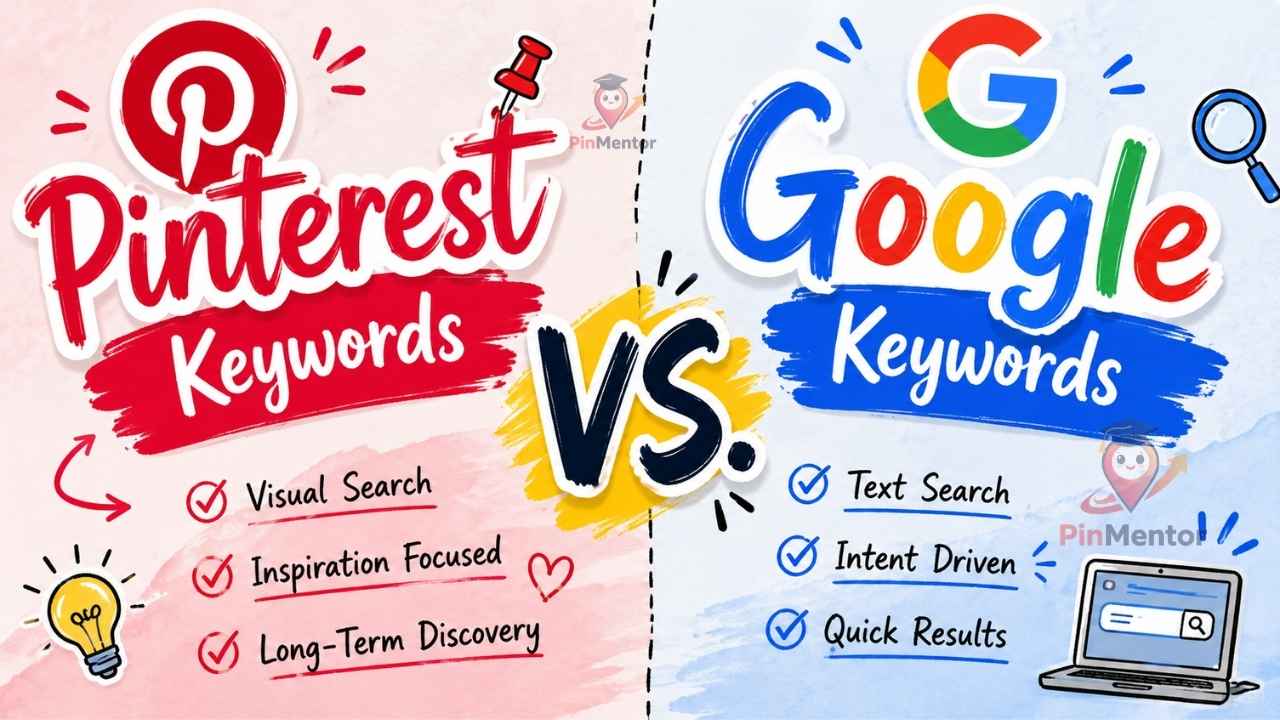
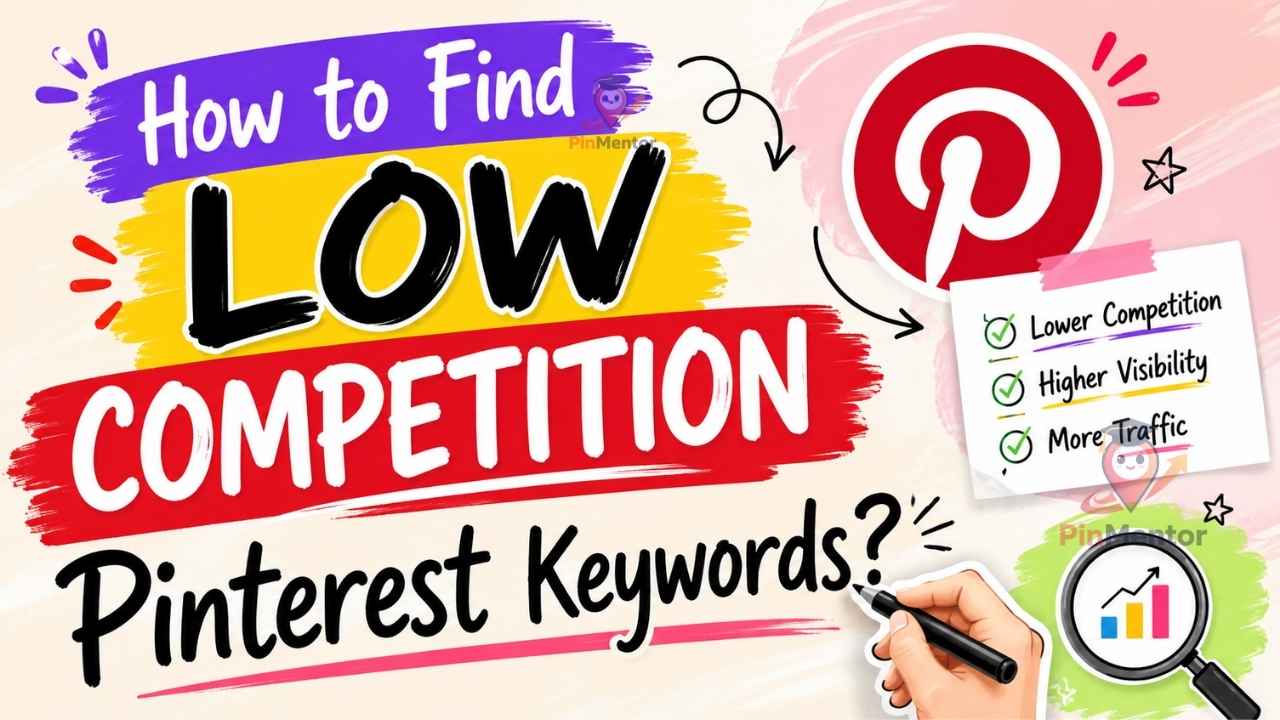
You can have the prettiest Pins in the world, but if your SEO is bad, nobody will see them. How to make money on Pinterest for beginners often comes down to who understands keywords the best.
Don't guess what people are searching for. Use the Pinterest search bar. Type in a broad term like "Cleaning Hacks." See the words that Pinterest suggests after it? Those are your keywords. "Cleaning hacks for busy moms," "Cleaning hacks for bathrooms," etc.
To rank in the search results, you need to sprinkle your keywords in four main places:
Pin Title: Keep it catchy but keyword-rich.
Pin Description: Write 2–3 conversational sentences using your main and secondary keywords.
Board Titles: Name your boards exactly what people are searching for.
Board Descriptions: Tell Pinterest what kind of content lives on that board.
I used to make pins that looked like busy collages. They got zero clicks. Why? Because people are scrolling fast on their phones. Your Pin needs to "stop the scroll."
Vertical Ratio: Always use 2:3 (1000 x 1500 pixels).
High-Quality Imagery: Use bright, clear photos. Avoid dark or blurry shots.
Bold Text Overlay: Tell the user exactly what they get if they click. "5 Ways To Save $1000" is much better than "Saving Money Tips."
Branding: Add your website URL or logo at the bottom. It builds trust.
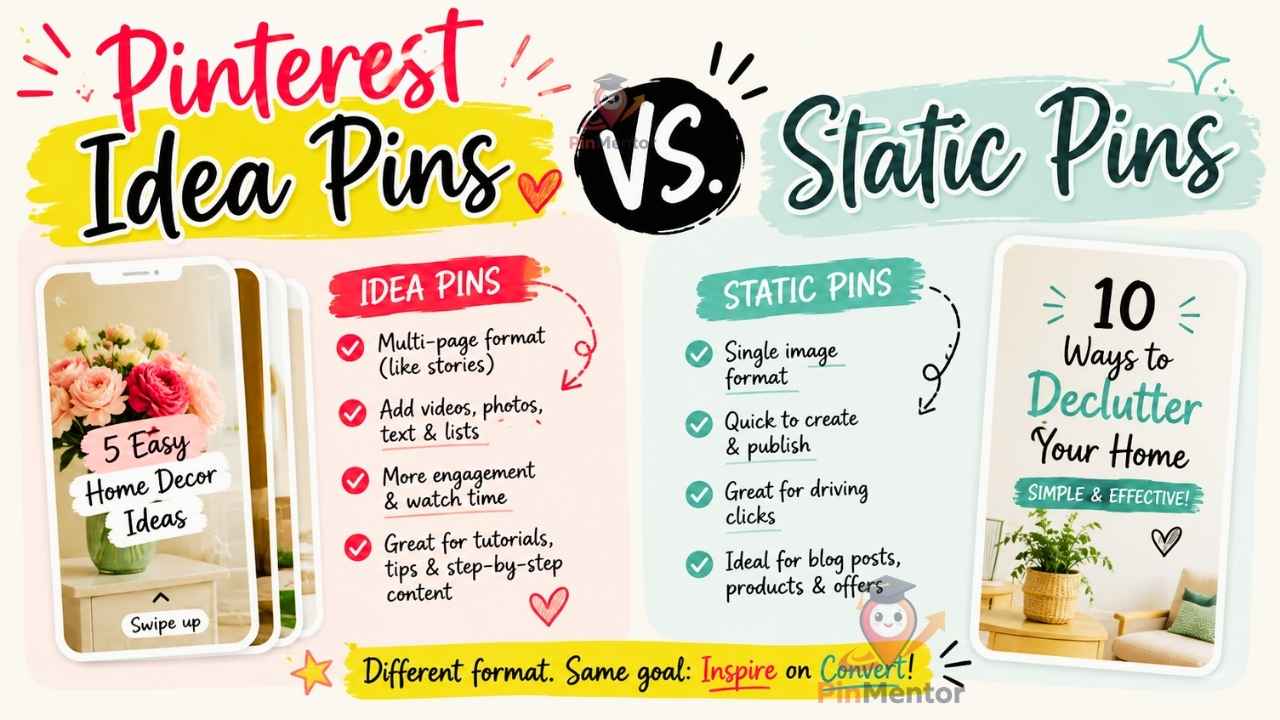
Now video is still king. Pinterest pushes Video Pins to the top of the feed. Even a simple 5-second video of you flipping through a planner or cooking a meal can get 10x the reach of a static image. For beginners, this is a "shortcut" to getting your first few thousand views.
The biggest reason beginners fail is that they Pin ten things one day and then forget about it for two weeks. Pinterest loves consistency. You need a workflow that doesn't burn you out.
I spend one Sunday afternoon a month creating all my Pins for the next 30 days. I use Canva (the free version is fine) and their templates. Once I have my 50–60 Pins, I schedule them using a tool like Tailwind or the native Pinterest scheduler.
Pinterest wants "Fresh Pins." This doesn't mean you need a new blog post every day. It means you need a new image. I can make five different Pins for the same affiliate product, and as long as the image file is different, Pinterest considers it fresh content.
Create 5–7 Fresh Pins.
Check Pinterest Analytics for "Top Performing Pins."
Search for 3 new trending keywords in your niche.
Engage with 5 Pins in your feed to stay active.
Update one old Board Description with new keywords.
I’ve made every mistake in the book. Looking back, I could have started making money months earlier if I had just avoided these traps.
Years ago, the advice was "Pin 80% other people's stuff and 20% your own." In these years, that is dead advice. To make money, you need to be Pinning 90–100% your own content. You want people clicking your links, not someone else's.
Pinterest places icons (like the search lens and save button) over parts of your Pin. If you put your important text in the bottom right corner, nobody can read it. Keep your text centered and away from the very edges.
Pinterest is a "slow burn" platform. It usually takes about 3 to 6 months for the algorithm to trust you and start showing your Pins to a massive audience. If you don't see money in week one, don't quit. Every Pin you create is a seed you’re planting for future income.
Once you see your first few dollars, it's time to scale. This is where you move from "beginner" to "pro."
Look at your Pinterest Analytics once a week. Which Pins are getting the most "Saves"? Which ones are getting "Link Clicks"? If a Pin about "Easy Keto Breakfasts" is blowing up, go make five more Pins about Keto breakfasts. Give the people what they want!
Don't be afraid to branch out. If you started in "Personal Finance," you could easily move into "Side Hustles" or "Career Tips." The more relevant keywords you rank for, the more doors you open for money to flow in.
Once you have a Pin that is already making you money organically, you can put a little "fuel on the fire" with Pinterest Ads. You can spend as little as $2 a day to get your Pin in front of thousands of more people. I only do this for Pins that I know already convert well.
I have to mention this because it can get your account banned if you ignore it. Whenever you are using an affiliate link, you must disclose it. Adding #ad or #affiliate to your Pin description is the easiest way to stay in the good graces of both Pinterest and the FTC.
People actually appreciate honesty. I’ve found that being transparent about my affiliate links doesn't hurt my click-through rate at all. In fact, it often builds more trust with my audience.
Starting a side hustle is hard. There will be days when your numbers drop for no reason. Pinterest goes through algorithm updates just like Google. When this happens, don't panic.
I remember a week where my traffic dropped by 40%. I wanted to delete my account. Instead, I just kept pinning my fresh content. Two weeks later, my traffic was higher than ever. The winners on Pinterest are simply the people who didn't stop.
Learning how to make money on Pinterest for beginners is a journey of a thousand Pins. You don't need to be a graphic designer or a tech genius. You just need to be a helper.
Find a problem people are having, create a beautiful Pin that offers a solution, and use the right keywords so they can find you. Whether you want to pay off debt, save for a vacation, or quit your 9-to-5, Pinterest is a powerful tool to get you there.
Stop scrolling and start Pinning. Your future self will thank you for the work you do today.
Starting out on Pinterest can be overwhelming, so I've gathered the most common questions I get from beginners. These answers are designed to help you navigate the platform with confidence and clarity.
No, you do not need a website. Beginners can make money by using direct affiliate links on their Pins or by driving traffic to a storefront like Etsy or a digital product page.
Follower count doesn't matter much on Pinterest. Since it's a search engine, your Pins are shown to people based on their interests and keywords, allowing you to make money even with zero followers.
It is actually the best time to start. Pinterest's shopping features are more advanced than ever, and there is a huge demand for fresh, authentic content from new creators and business owners.
A beginner can realistically earn anywhere from $100 to $1,000 a month within the first six months. It depends on your niche, the quality of your Pins, and how consistently you apply your how to make money on Pinterest for beginners strategy.
High-intent niches like home decor, personal finance, DIY crafts, and health and wellness perform the best. These categories have large audiences looking for inspiration and products to buy immediately.

PinMentor helps you analyze, optimize, and scale your Pinterest strategy with powerful analytics and insights.


@ PinMentor LLC. All Rights Reserved